


What is IVF Treatment?
What is IVF Treatment? The process of bringing together sperm cells and egg cells in a laboratory environment and exposing them to the fertilization process is called in vitro fertilization. IVF is an abbreviation of the word “in vitro fertilization” and refers to the union of the sperm-egg duo in the laboratory.
Content
Classic IVF and success
What is IVF Treatment? We can define IVF treatment as a process that is applied to couples who cannot have children through normal means and that should be managed by an expert team. In particular, raising the awareness of the couple about the treatment stages is very important for the success of IVF treatment. Before starting or deciding on the application in question, it should be investigated whether pregnancy can be achieved with simpler methods. If there is no sperm problem related to the man and ovulation functions are normal, there is no need to try IVF in young couples. Results can be obtained in a simpler and more affordable way with ovulation-enhancing methods or insemination treatment.
The success of classic IVF treatment is increasing day by day. The reason for this is that many factors progress correctly in parallel. In other words, certain conditions must be met in order for IVF treatments to yield successful results.
6 factors that ensure success in IVF treatment (What is IVF Treatment?)
- Choosing experienced IVF centers with a high successful birth rate is an important factor that increases success. In addition, the use of specialist doctors and advanced technological methods also supports success.
- A healthy diet and a healthy body are among the factors that increase success.
- Not having bad habits such as smoking and drinking alcohol means taking another step towards success.
- In particular, the woman’s age factor is one of the most important factors in IVF treatments. The expectant mother having quality eggs means an environment that will provide the baby with the formation. Since the egg’s function decreases at advanced ages, treatment should be applied at the age when she is fertile. If it is too late, the success rate is very low.
- The support of couples for each other is a very important detail. An understanding and patient attitude will bring success.S
- tress should definitely be avoided. Stress directly affects the baby negatively. We can say that it is essential to avoid it and relax yourself.
Who can benefit from in vitro fertilization treatment?
- IVF prosess can be applied to those diagnosed with infertility
- In cases where both tubes are blocked
- In cases where ovarian disorders
- In cases where there is no sperm in the ejaculate
- In cases where sperm quality is impaired
- In cases where cervical factors are detected
- In cases where tubes are removed during surgery
- In cases where there is insufficient sperm or egg count
- In cases where cysts in the ovaries cause infertility
- In cases where there are hormonal disorders
- In cases where there are problems with sexual intercourse
- In cases where there is a problem with sperm motility
- In cases where sperm cell deformities
- In cases where there is recurrent pregnancy loss
- In cases where the woman is older, IVF prosess can be applied.
What are the stages of IVF treatment? What is IVF Treatment?
In candidates who are considered for IVF treatment, the treatment starts on the 2nd or 3rd day of the expectant mother’s period. On the day of the start, the expectant mother is checked with an ultrasound. The reason for this is to determine whether there is a problem in the ovaries and uterus that will prevent starting the treatment.
The FSH and estrogen levels in the expectant mother’s blood are evaluated. If no obstacle is seen to start the expectant mother’s treatment; the most appropriate treatment method for the patient is determined by taking into account the expectant mother’s age, cause of infertility, blood test results and ovarian capacity. Hormone treatment is started to support egg formation for IVF treatment. This period is called controlled ovarian stimulation. During this period, ultrasound checks are performed at certain intervals to examine the response to treatment and egg development, and the hormone evaluation in the blood is examined.
- Stimulation of Ovaries
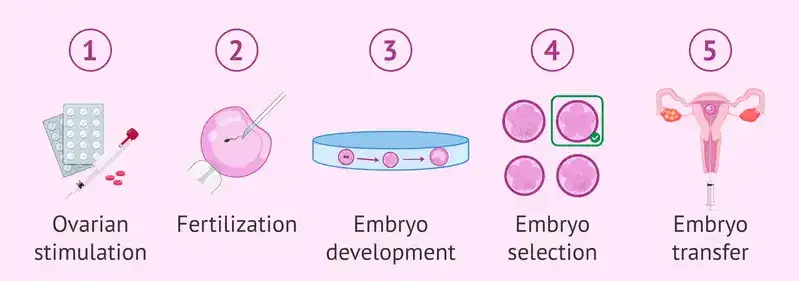
Hormone supplement drugs in the form of injections are started. The reason for this is to stimulate the ovaries on the 3rd day of the new menstrual period. These drugs are used to ensure the development of more than one egg cell from the ovaries. This process increases the possibility of pregnancy. The duration of ovarian stimulation varies depending on the patient. The response of the ovaries to the drug used determines the length of this process. This period usually varies between 10-12 days. Egg development is monitored during this period with hormones and ultrasound every two days.

What is IVF Treatment ivf – What is IVF Treatment?
- Egg Collection
What is IVF Treatment? After the egg cells reach a certain maturity and size, a hormonal injection that helps the eggs to crack is used. The egg collection operation is performed 34-36 hours after the injection is applied. It is very important that this injection is done on time. Egg collection is performed under sedation anesthesia, or a state called sleep, via transvaginal ultrasonography. The reason for this is to prevent the patient from feeling pain. The patient is taken on an empty stomach in the morning. The procedure is completed in approximately 20 to 30 minutes.
During this operation, the fluid inside the follicles is collected. The eggs are collected by evaluating whether there are eggs in the fluid. In the first procedure, eggs may not be found in the follicle fluid. In these cases, the inside of the follicle is washed with the help of a special liquid and an attempt is made to find any eggs that may have remained in the follicle.
While the number of eggs per patient can be 10-12, this number can also be from 1 to 40. In very rare cases, there is a possibility that no eggs may be collected. After this procedure, the patient is monitored for 1-2 hours and then can go home. The next step is to select the ideal eggs from the collected eggs, fertilize them and transfer them into the uterus.
- Fertilization of Eggs
After selecting the good and fertilizable eggs called MII oocytes obtained through the egg collection process, they are fertilized in a laboratory environment by classical in vitro fertilization or microinjection by checking the sperm cell quality. In some cases, it may be more beneficial to use the microinjection method to increase the probability of fertilization. The sperm cell fertilizes the egg cell and forms an EMBRYO. In a special culture environment, the fertilized eggs are monitored until they can be transferred to the expectant mother’s uterus. A good and high-quality embryo is selected and transferred into the uterus.
What is IVF Treatment prosess – What is IVF Treatment?
- Embryo Transfer
The transfer of embryos from the laboratory to the uterus of the prospective mother is called embryo transfer. This stage is a procedure that does not require anesthesia and the patient will not feel pain. The transfer is performed 48-72 and in some cases 120 hours after the egg collection process. The time of the transfer is determined depending on the number and quality of embryos. Before the transfer, the cervix is cleaned with special fluids. The transfer into the uterus is performed by passing through the cervix with the help of a thin catheter. After this application, the embryos left in the uterus are expected to continue to develop on their own and attach to the uterus.
- Waiting Period
During this process, you should take good care of yourself and your baby and stay away from all factors that may harm you. You should avoid excessive movements and heavy work. Paying attention to your nutrition is very important for its development and attachment.
You can understand the result of the IVF treatment after the pregnancy test to be performed 2 weeks after the embryo transfer. However, failures may occur in some cases. Do not worry about this. This possibility does not pose a danger in the first unsuccessful IVF treatments. The reasons should be investigated and the second attempt should be started again. There are many couples who have achieved success as a result of this IVF treatment. (What is IVF Treatment?)
You can contact for detailed information:
Instagram : dralpersismanoglu Facebook : OpDrAlperSismanoglu
What is IVF Treatment?, IVF Treatment, IVF, Infertility Treatment,
What is IVF Treatment?


