



Ovulatory Dysfunction
Ovulatory Dysfunction is ovulation, one of the main causes of hormonal changes observed in the body, which occurs regularly once a month in women of reproductive age and ensures the continuity of activities such as menstruation and reproduction.
Ovulatory dysfunction is one of the most frequently mentioned causes of infertility. Ovulation disorder (problem) is also called ovulatory dysfunction. On average, 1/3 of the causes of infertility in women are related to problems with ovulation.
What we characterize as a problem or disorder related to ovulation activity is actually more of an ovulation irregularity. In summary, ovulation occurs in women, but this ovulation occurs irregularly and infrequently, not regularly as it happens every month. Therefore, menstruation becomes irregular.
- In the event that there is no ovulation at all, this type of problem, which may be rare, is included in the condition referred to as ovulation disorder. Women who never ovulate do not have a menstrual cycle.
- 1 WHO Class 1: Hypogonadotropic hypogonadism: Low levels of FSH and estrogen. Between 5% and 10% of patients are in this group.
- 2 WHO Class 2: Hypothalamo-hypophyseal dysfunction: FSH and estrogen hormone levels are normal. Polycystic ovary syndrome patients are included in this group. Between 70% and 80% of patients are in this group.
- 3 WHO Class 3: Hypergonatodtropic hypogonadism: (ovarian insufficiency) FSH hormone levels are high and estrogen hormone levels are low. Early menopause or menopausal patients are included in this group. Between 10% and 30% of patients are in this group.
- Ovulatory dysfunction related to obstruction of the genital canal or caused by hyperprolactinoma (high prolactin, milk hormone) is also possible.
Causes and symptoms of ovulatory dysfunction
Ovulation problems can be caused by stress and various diseases. Polycystic ovary syndrome (PCOS) is one of the most important causes of ovulation disorders. However, polycystic ovary syndrome is not present in all cases where ovulation is irregular. In polycystic ovary syndrome, periods are generally irregular and infrequent. Some patients with polycystic ovary syndrome do not menstruate at all, while others have a normal menstrual cycle. Complaints such as excess weight, acne and oily skin are common. There are more eggs in the ovaries than normal, but these prevent the normal development of the egg because they secrete male hormones.
Women who never ovulate are more likely to have problems with the pituitary gland in the brain, menopause and genetic disorders.
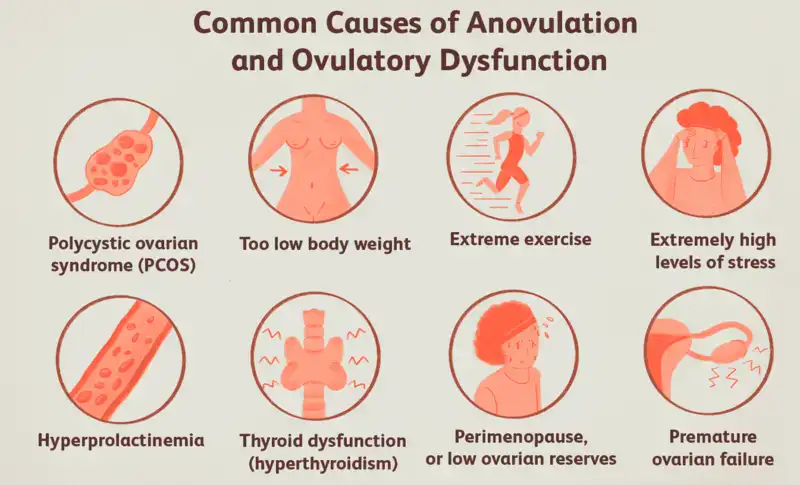
Ovulatory Dysfunction Causes
How to recognize ovulatory dysfunction caused by stress and polycystic ovary syndrome?
Ovulatory dysfunction is recognized when there are no symptoms of ovulation. Various methods are used to determine whether ovulation is occurring. These methods allow us to diagnose ovulatory activities;
- Checking the ovum with ultrasound
- Assessment of progesterone hormone on day 21 of the menstrual cycle
- It is the monitoring of the woman’s body temperature after ovulation on the 13th to 15th days of the menstrual cycle.
If this problem is present, treatments called ovulation induction are given to the patient. These treatments may sometimes be insufficient, in such cases in vitro fertilization is also applied as a supplement.
Sometimes vaccination is also included in the treatment process in order to achieve pregnancy with ovulation regulating treatments.
Ovulation regulators, i.e. egg enlargers, are medicines used both as oral tablets and injections.
How to treat ovulation disorders in women who do not want to get pregnant?
Problems such as irregular menstrual cycles and hair growth may be caused by ovulation disorders. In this case, depending on the complaint; treatments such as menstrual regulating hormonal drugs, hair reduction drugs, hair removal and birth control pills are used. However, such medications should never be used without a doctor’s advice.
Relationship between weight and ovulation disorders
Being overweight is a problem for ovulation. It is therefore recommended that overweight women lose weight. Healthy nutrition and sports will help to lose weight. After losing excess weight, the existing ovulation disorder complaint will be prevented and the menstrual cycle will be regulated.
Conception in patients with ovulation disorders
If there is no problem other than ovulation disorder that causes infertility, it is possible to become pregnant after ovulation disorder treatment.
In ovulation disorders due to polycystic ovary disease, the patient can easily become pregnant. However, in ovulation disorders due to genetic or menopausal causes, the patient’s chances of achieving pregnancy are low.
You can contact for detailed information:
Instagram : dralpersismanoglu Facebook : OpDrAlperSismanoglu
Ovulatory Dysfunction


